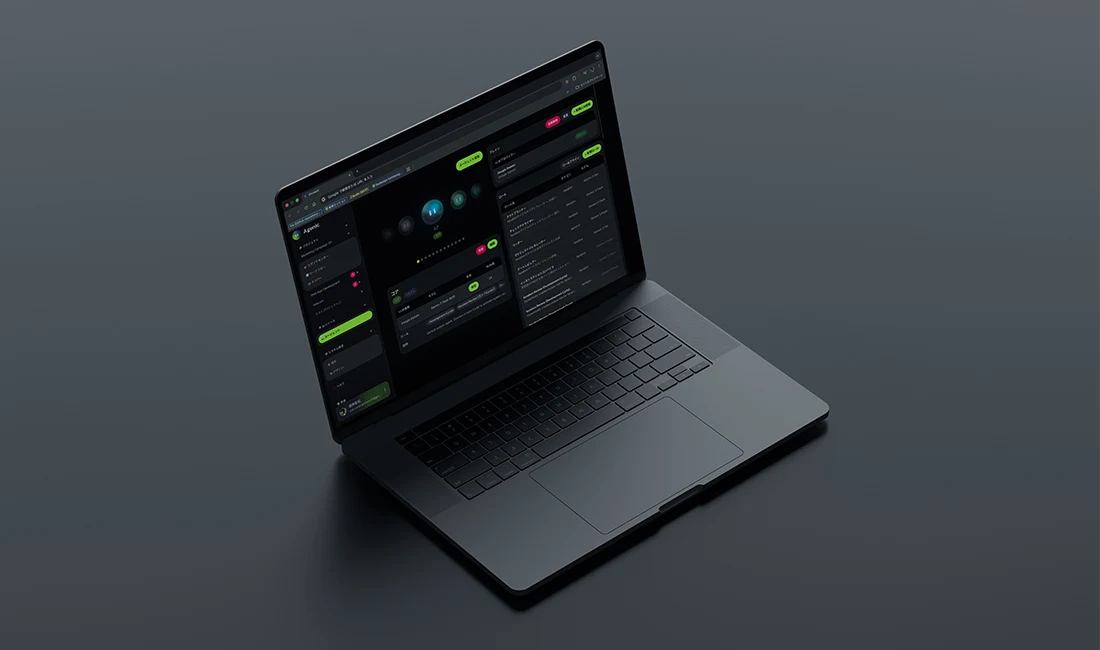
Agenic: Autonomous AI Execution Platform
The Problem Space
In 2026, the AI agent landscape is split between what has been standardised: single LLM calls, basic tool use, short context management: and what remains unsolved: long-running goal persistence, failure classification, provider abstraction, and the critical boundary between autonomous execution and human intervention. Agenic was built to operate precisely in that unsolved space.
Solo Build, Production Scale
Developed solo by Tomoaki Susai over 5 weeks: the equivalent of what a team of 5–8 engineers would typically build in 3–6 months. Approximately 80,000 lines of code. Over 100 explicit design decisions encoded in the architecture: agent granularity, retry boundaries, failure mode taxonomy, log resolution, and external tool delegation boundaries. These are not framework choices. They are hard-won operational judgments.
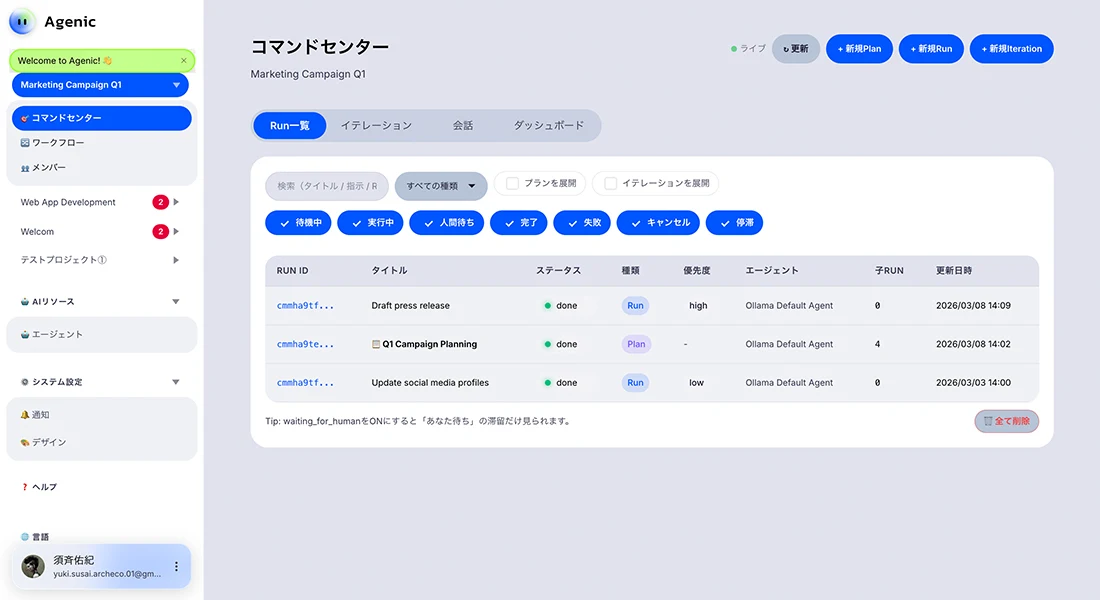
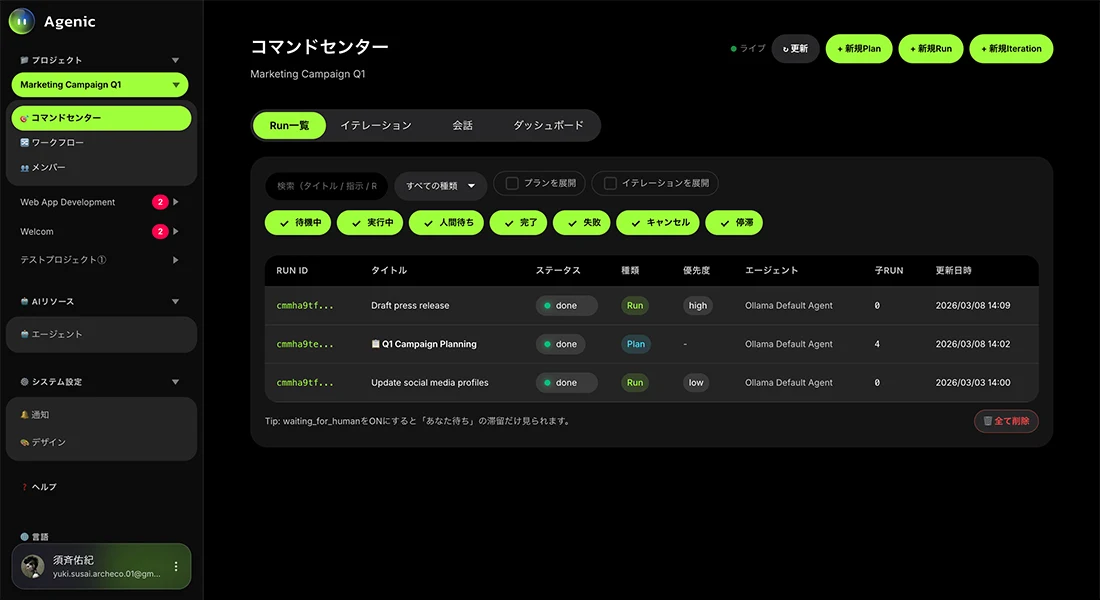
What Running It Taught Us
Integrating AI into a workflow is categorically different from having AI autonomously run a workflow. The design core of any agent system is not its tools or prompts: it is its failure handling. And tight coupling to a single LLM provider is a five-year technical debt. These three findings now inform every AI project ARCHECO takes on with clients.